Buying guide
Baselit vs Xenopixel vs Proffie: you are comparing two different things
Almost every shop lists Baselit, Xenopixel and Proffie side by side as if they were three versions of the same product. They are not, and that single piece of mislabelling is why so many first-time buyers overspend. Baselit and neopixel are BLADE types. Xenopixel and Proffie are SOUND BOARDS that drive a neopixel blade. You are making two decisions, not choosing from three.
The short version
| Our pick for | Product | From |
|---|---|---|
| If you will actually duel with it | Baselit blade | from $299 |
| If it is mostly for display and video | Neopixel blade + Xenopixel board | $355–$385 |
| Only if you will actually program it | Neopixel blade + Proffie board | from $469 |
| If screen accuracy matters more than effects | Replica-focused makers | from $180 |
Prices checked September 2026 on each vendor's own page. They change — verify before you buy.
If you will actually duel with it
Baselit blade from $299
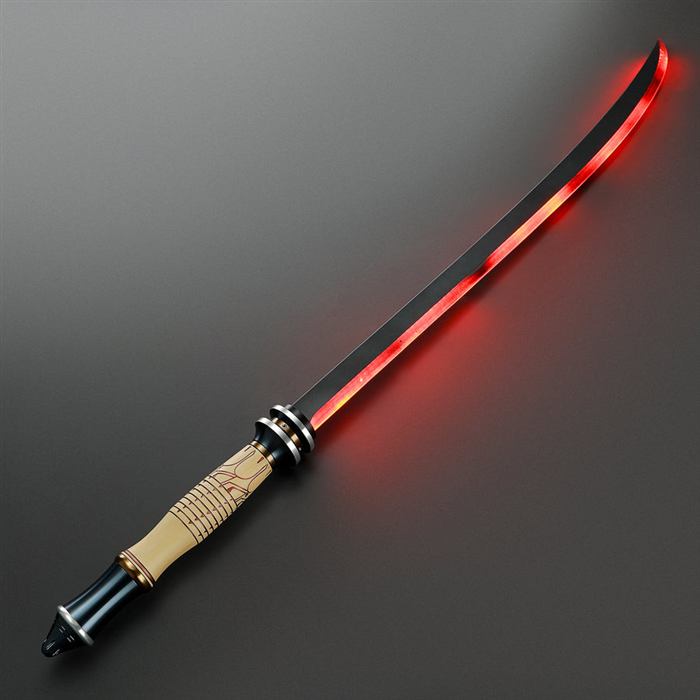
A baselit blade is a hollow tube with a reflective lining, lit by LEDs down in the hilt. There is almost nothing inside it to break. A neopixel blade carries 250-plus LEDs along its length, and every one of them is a thing that can fail when blades meet. For sparring, the cheaper blade is the more durable blade — that is not a compromise, it is the correct answer.
- Light source
- In the hilt, shining up the blade
- Durability
- Highest
- Ignition effect
- Whole blade at once
- Typical price
- from $299
Good
- Survives contact better than anything else here
- Cheapest route to a real saber
- Blade replacements cost less
Not so good
- No scrolling ignition
- Flat, even glow rather than per-segment effects
If it is mostly for display and video
Neopixel blade + Xenopixel board $355–$385
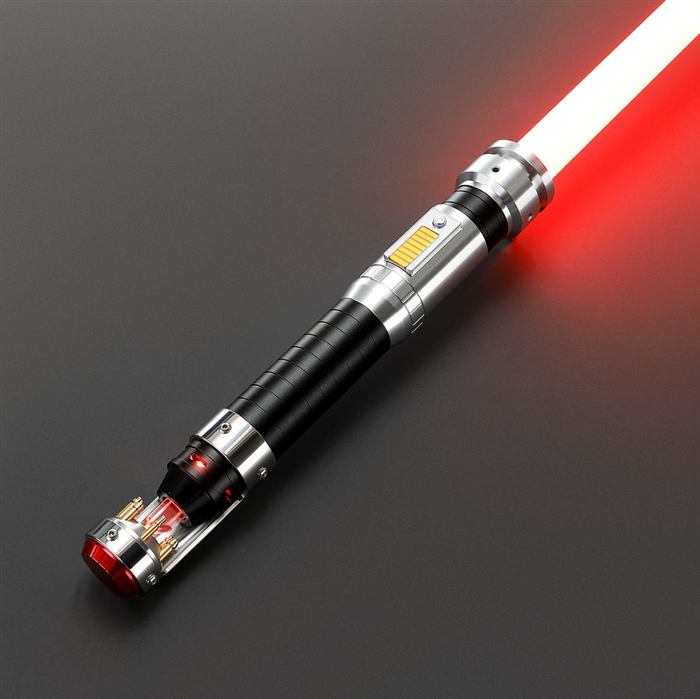
This is the configuration most people actually want and the one the hobby points beginners towards. The LED strip inside the blade gives you the scrolling ignition, the blaster-bolt flashes and the colour changes people buy these for. The Xenopixel board runs it all from a phone app with nothing to learn. For roughly $86 more than baselit, you get the effect that made you want one.
- Light source
- 250+ LEDs inside the blade
- Board
- Xenopixel — app controlled
- Programming
- None required
- Typical price
- $355–$385
Good
- Scrolling ignition and per-segment effects
- Set up entirely from an app
- The middle price, and the one most buyers should pick
Not so good
- More fragile than baselit under heavy contact
- Blade replacement costs more
Only if you will actually program it
Neopixel blade + Proffie board from $469
Proffie is a programmable board with a large community making fonts and blade styles for it. In the right hands it does things Xenopixel cannot. In the wrong hands it is over $100 of menu you will never open. Be honest about which you are: if the phrase 'edit a config file' does not appeal, the answer is Xenopixel and you keep the difference.
- Light source
- 250+ LEDs inside the blade
- Board
- Proffie — fully programmable
- Programming
- Required to get the value
- Typical price
- from $469
Good
- Near-unlimited customisation
- Large community library of fonts and styles
Not so good
- Over $100 more than Xenopixel on the same hilt
- Worth nothing extra if you never open the software
If screen accuracy matters more than effects
Replica-focused makers from $180
If the point is a hilt that matches what you saw on screen, machining accuracy matters more than which board is inside. Makers focused on replicas start around $180 for simpler hilts and run past $500 for the detailed ones. You still choose a blade type and a board on top — the two decisions above do not go away.
- Entry price
- around $180
- Detailed replicas
- past $500
- Board
- Still your choice on top
Good
- Closest to screen-accurate hilts
- Wide range of well-known designs
Not so good
- Prices swing enormously within one brand
- You are paying for the shell, not the electronics
We have no affiliate link for this one — it is here because it deserves to be.
How we chose — and what we did not do
We have not physically tested these products. Plenty of sites imply that they have; we would rather tell you what this page is actually built on:
- How each technology behaves — what a baselit blade does that a neopixel one does not, why Proffie costs more — comes from manufacturer documentation and the hobby's own technical write-ups, not from shop marketing copy.
- Prices come from the vendors' own stores, read in September 2026 with the currency forced to USD.
- We have not dueled with these blades ourselves. The durability difference stated here follows from what is physically inside each blade — 250-plus LEDs and their wiring, against an empty tube with a reflective lining.
- One of the four options here earns us a commission. The replica makers earn us nothing and are in the list because for some buyers they are the right answer.
Where hands-on testing matters more than specifications — how a strap feels after two hours, how a menu behaves in the cold — we say so in that product's section rather than guessing.
The two decisions, in order
Decision one: what is inside the blade
Baselit means the blade is an empty tube with a reflective lining, lit from the hilt. Neopixel means a strip of 250-plus individual LEDs runs the length of the blade. That is the whole difference, and everything else follows from it: neopixel can light up progressively from hilt to tip, flash where a blaster bolt hits, and change colour per segment. Baselit cannot do any of that, and has almost nothing inside it to break.
Decision two: which board drives it
This decision only exists if you chose neopixel. Xenopixel runs the blade from a phone app with no setup. Proffie is programmable, with a community library of fonts and blade styles, and costs well over $100 more on the same hilt. Baselit sabers have their own simpler boards — the Xenopixel-or-Proffie question does not apply to them.
Why shops list all three together anyway
Because it is how people search, not because it is accurate. The result is that a beginner comparing a $299 Baselit against a $385 Xenopixel thinks they are looking at 'cheap version' and 'good version' of the same thing. They are not. They are looking at a durable blade and a spectacular one, and which is better depends entirely on whether the saber will be swung or displayed.
What the bundled extras are worth
Sabers at this price often ship with two free RGB sabers. Those are lit from the hilt like baselit and have no in-blade effects — they are duelling partners and loaners, not second display pieces. That is genuinely useful, because you cannot spar alone. Just do not read 'two free sabers' as 'two more neopixel blades'.
Questions people ask
Is Xenopixel a blade or a board?
A board. It is the electronics that drive a neopixel blade. The blade types are baselit and neopixel; the boards are Xenopixel, Proffie and others. Shops listing all three together as product tiers is the single most common source of confusion in this hobby.
Which is best for dueling?
Baselit. It is a hollow tube with a reflective lining and almost nothing inside to break, where a neopixel blade carries 250-plus LEDs along its length. It is also the cheapest option, which makes it an easy recommendation for sparring.
Do I need Proffie?
Only if you will program it. Its value is in editing fonts and blade styles, backed by a large community. If you will not open the software, Xenopixel gives you the same visual effects from an app for well over $100 less on the same hilt.
What should a first-time buyer get?
For most people: a neopixel blade on a Xenopixel board, in the $300–400 range. If you already know you will spar regularly, buy baselit instead and spend the savings on a second blade.
Can I change the board later?
Swapping boards is a hardware job, not a settings change, and it is not something most buyers should plan around. Choose the board you want now rather than buying cheap and intending to upgrade.